- Polya
Drawn on (extended)
Quick Description
This investigation is only for pupils who have already completed the Drawn On investigation. In that investigation pupils were investigating how many squares could be drawn onto square grids of various sizes.
This is a higher level investigation perhaps more suitable for an extension club, rather than as a whole class activity. In this investigation pupils first revisit the method and turn this into a concise formula. Pupils then investigate how many rectangles can be drawn onto square grids of various sizes which leads to a quartic nth term.
Prior Knowledge
Pupils must have a good undestanding of quadratic sequences.
Instructions
-
Before pupils begin the investigation establish that cubic sequences would have a constant third difference. I suggest simply looking at the sequence and noting that the third difference is . This third difference then needs to be divided by (NOT BY ) to arrive at the coefficient of .
-
The sheet does explain (at the top of section 2) that we are considering any rotation of rectangles. For example the diagram below shows the four possible positions for a rectangle to be placed on a grid. This point may need to be reinforced to pupils.
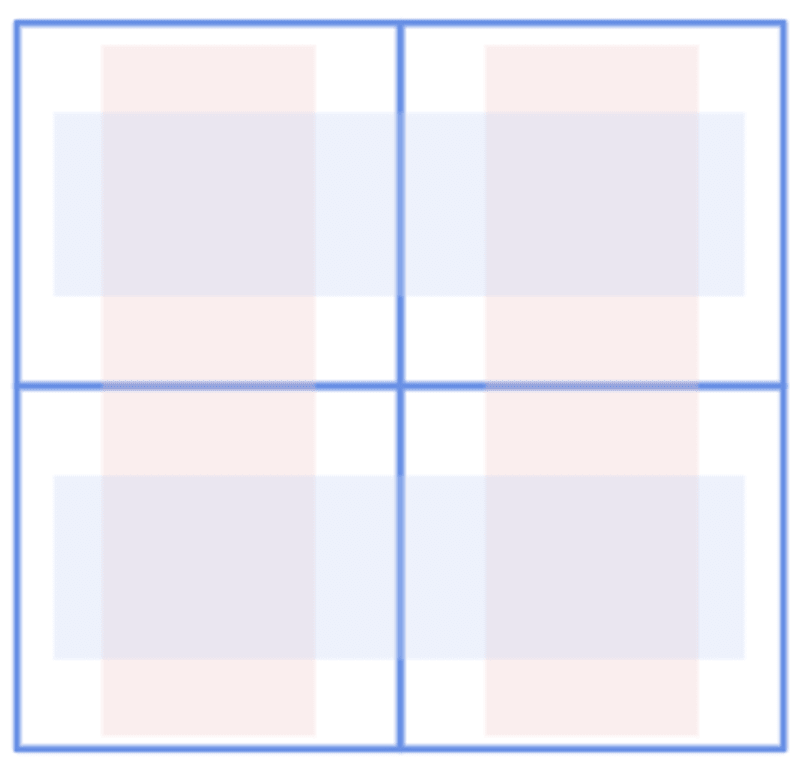
- With these points established pupils can begin investigating, with the resource doing the heavy lifting and the teacher providing help where needed.

Drawn on (extended)
Drawn on (extended)